
Published: November 14, 2025
Your AI assistant gives great advice but can't actually _do_ anything. You're still the middleman, copying information between apps and manually triggering actions. Two platforms are solving this problem, but in very different ways.
Quick Overview§
Definable.ai: Build AI That Understands Your Business§
Definable isn't just a chatbot tool—it's a complete platform for creating custom AI assistants that genuinely understand your business. You're building AI team members that know your products, speak your company's language, connect to your systems, and handle complex workflows autonomously.
Think of it this way: you're not getting a generic assistant with some integrations bolted on. You're creating specialized AI that can handle customer support, manage internal knowledge, process transactions, and execute multi-step workflows without constant supervision.
Rube.app: Connect Your AI to 500+ Apps§
Rube is simpler—it's a bridge that connects your existing AI (like Claude or ChatGPT) to over 500 apps through natural language commands. Tell your AI to "email the team and create a task," and Rube makes it happen. It's quick to set up and works with the AI you already use.
Side-by-Side Comparison§
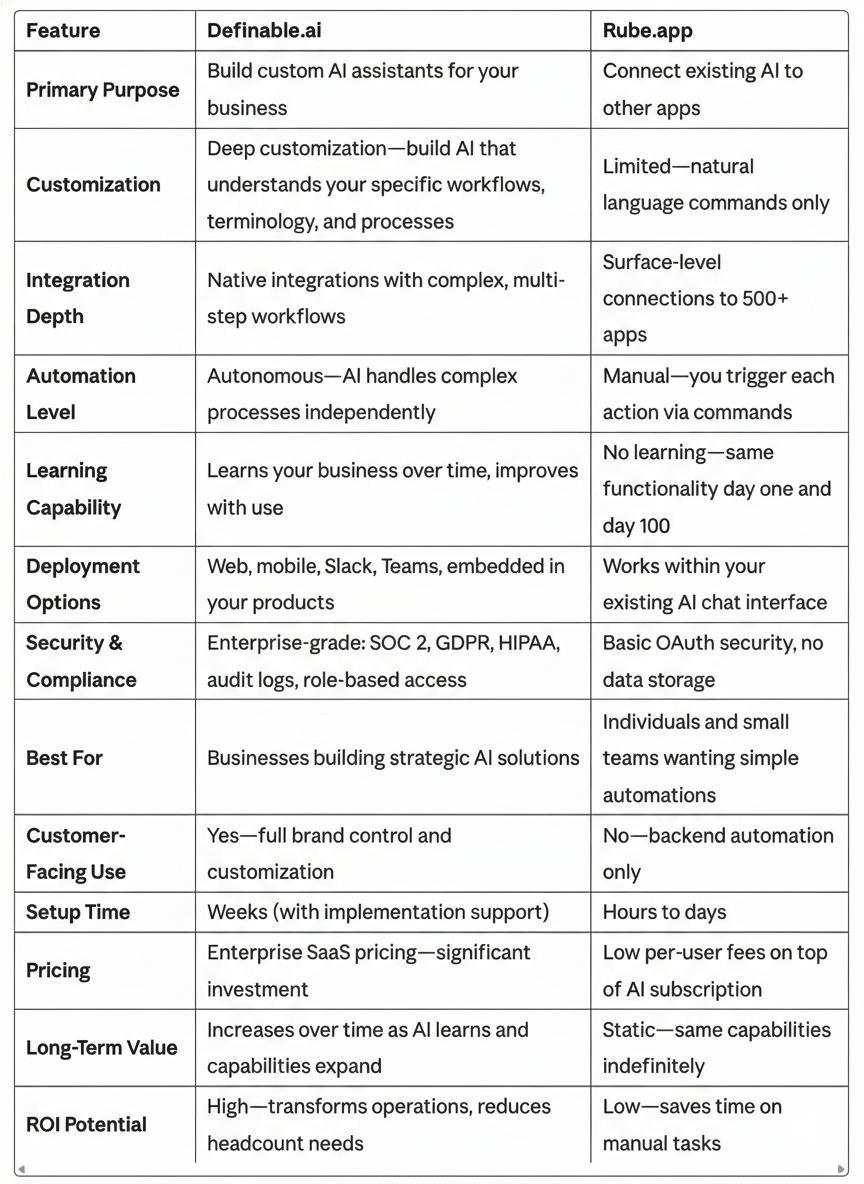
The Real Difference§
Here's what it comes down to: Rube gives your AI a Swiss Army knife—lots of tools, but you're still doing the work. You issue commands one at a time, and the AI executes them.
Definable builds you a specialized vehicle designed for your exact journey. Your AI understands context, makes decisions within your parameters, and handles entire workflows autonomously.
With Rube, you might say: "Email the sales team about today's meeting."
With Definable, your AI automatically knows when to email the team based on deal stages, what information to include, who should be copied, what CRM updates to make, and what follow-up tasks to create—all based on your established processes.
When to Choose Each Platform§

Pricing Breakdown§
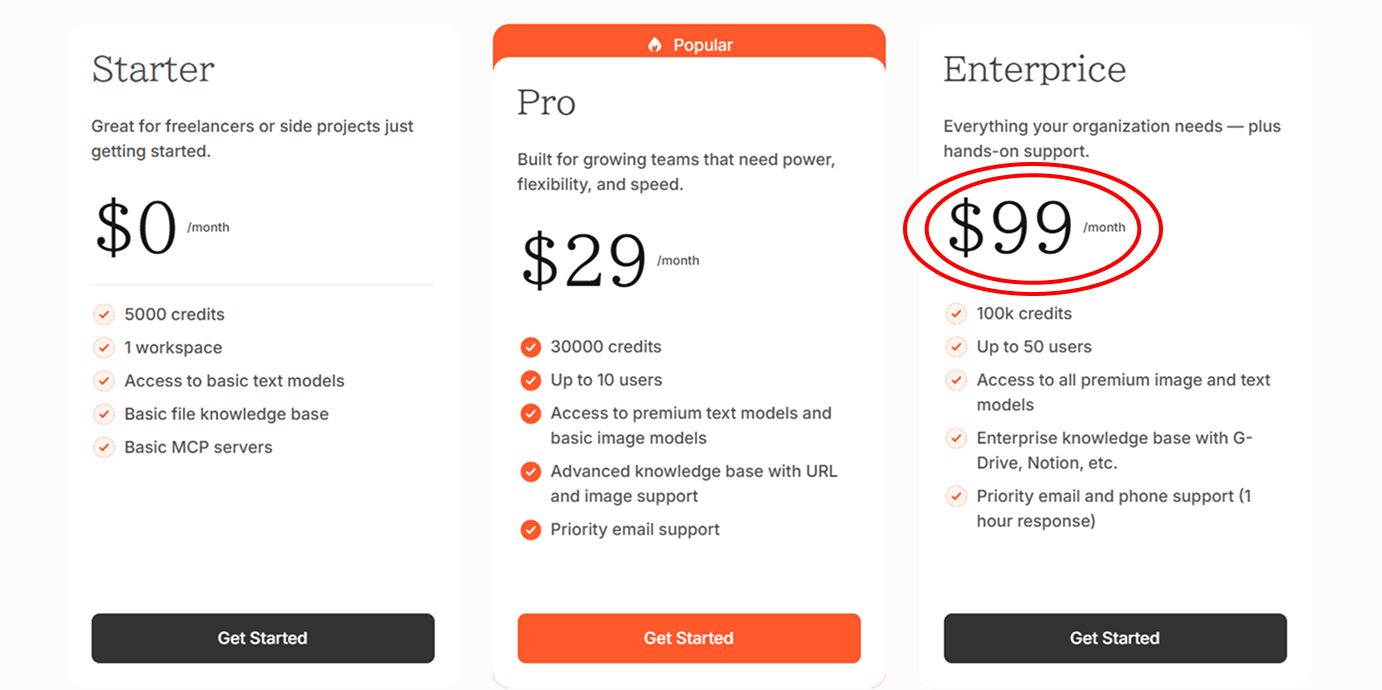
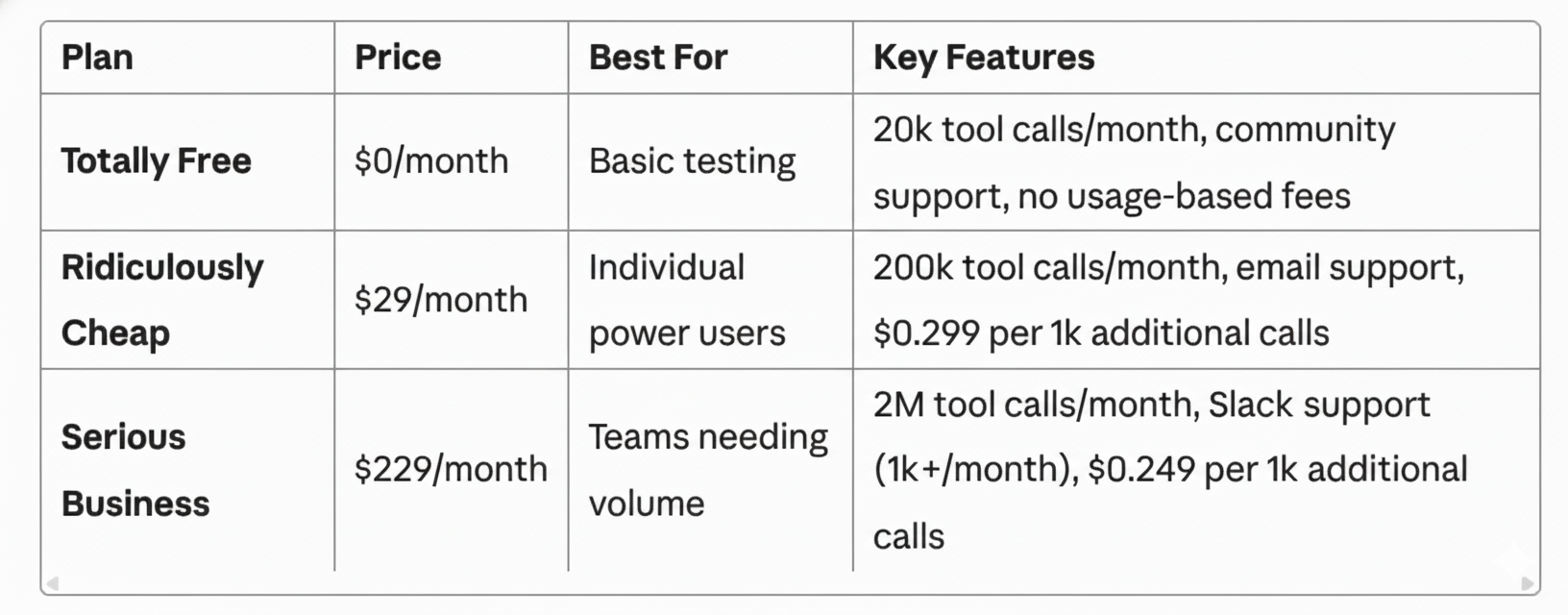
Let's talk real numbers. Both platforms have very different pricing models that reflect their different value propositions.
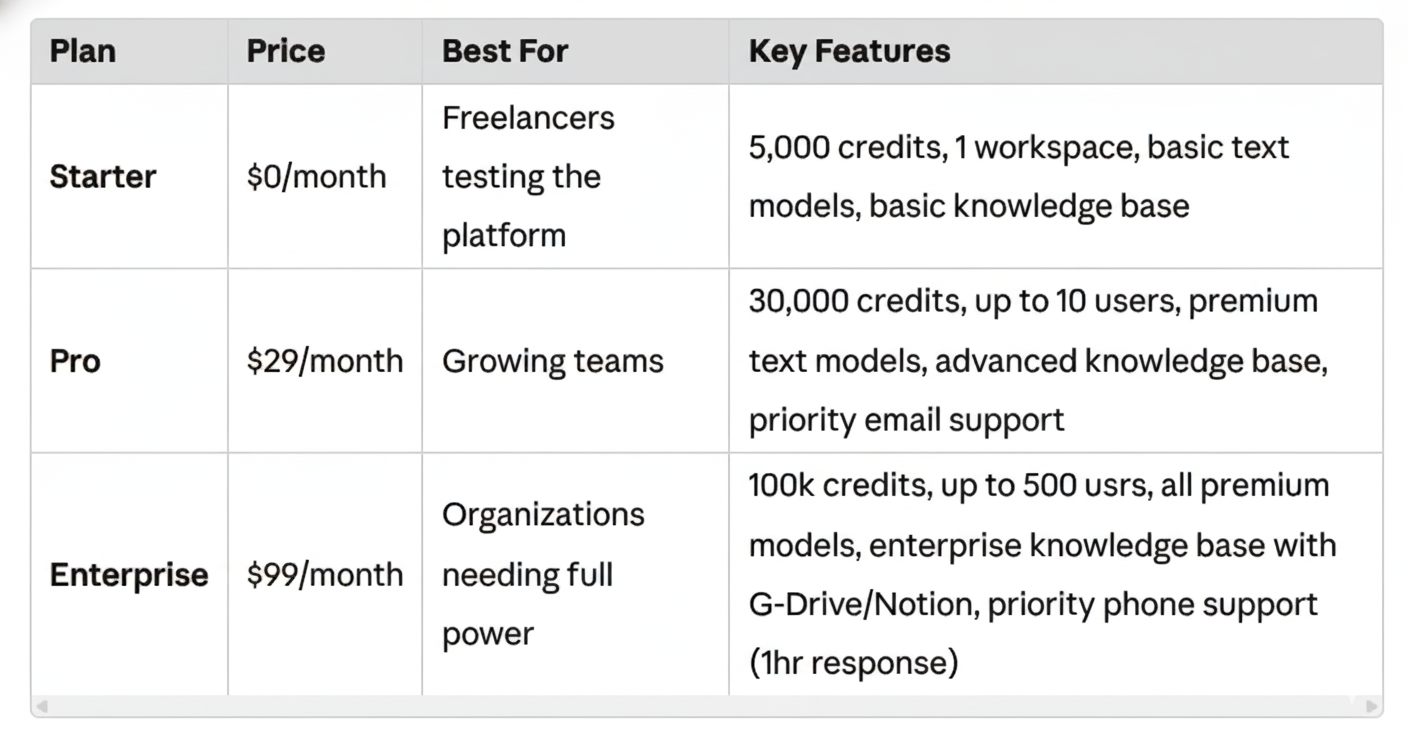
Definable.ai Pricing§
§
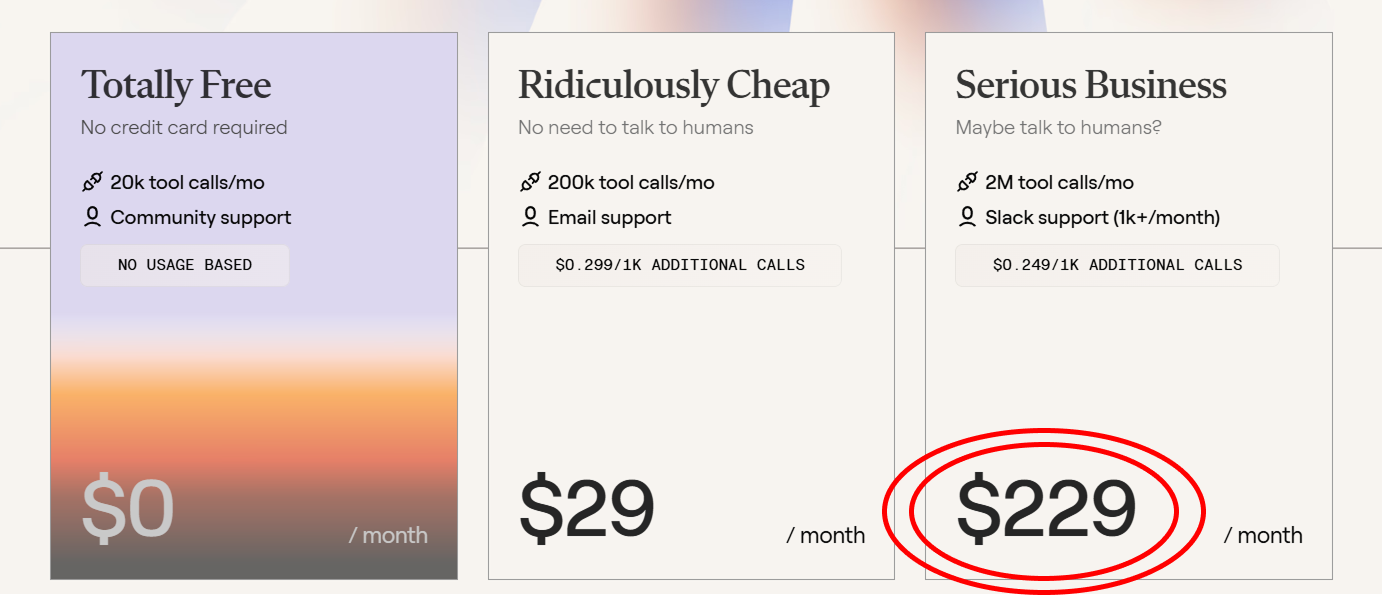
Rube.app Pricing
The Real Cost Comparison§
Here's what most people miss: you're not comparing like with like.
Definable at $99/month gets you:
- 50 users with full access
- Complete AI assistant platform
- Custom knowledge base with enterprise integrations
- Premium AI models
- Priority support with 1-hour phone response
- No overage charges per interaction
Rube at $229/month gets you:
- Tool call volume (still need to pay for your AI subscription separately)
- Basic app connections
- Slack support
- Overage charges if you exceed 2M calls
- No customization, no learning, no intelligence layer
Bottom line: For serious business use, Definable's Enterprise plan at $99/month is actually cheaper than Rube's team plan, and gives you exponentially more value. You're getting a complete AI platform vs. just a connection layer.
My Honest Take§
I tried to be balanced, but the truth is these platforms aren't really competitors—they're in different categories entirely.
Rube is a useful utility for simple needs. It does what it says on the tin: connects your AI to apps. That's valuable for individuals who want quick productivity wins.
But Definable is building the infrastructure for how businesses will actually use AI over the next decade. It's not just connecting apps—it's enabling real AI transformation.
If you're running a business and thinking strategically about AI, Definable is where you should be looking. Yes, it costs more. Yes, it takes longer to implement. But the capabilities you unlock are in a completely different league.
The companies investing in sophisticated AI assistants that deeply understand their business will have a massive advantage over competitors still manually coordinating between apps.
Don't mistake tactical convenience for strategic capability. Rube saves you a few minutes here and there. Definable transforms how your entire organization operates.
What You Should Do Next§
Ready for real AI transformation? Visit definable.ai to see what's possible when AI actually understands your business.
Just want to test basic integrations? Check out rube.app for simple AI-to-app connections.
But remember: the tool you choose should match your ambitions, not just your current needs. Choose accordingly.
_Questions about implementing AI in your organization? I'd love to hear what you're trying to solve._

Key takeaways
- Definable.ai builds specialized, context-aware AI assistants that can run multi-step workflows autonomously.
- Rube.app offers fast, broad app connectivity to execute single commands across 500+ apps.
- Pricing isn't apples-to-apples—Definable's platform can deliver more enterprise value per dollar for strategic use.
- Choose Rube for quick productivity wins; choose Definable for long-term AI transformation aligned to business processes.
FAQ
What is the main difference between Definable.ai and Rube.app?
Definable.ai builds custom, context-aware AI assistants that can autonomously run workflows and integrate deeply with enterprise systems, while Rube.app connects existing LLMs to 500+ apps to execute single commands and tool calls.
Which platform is better for large businesses?
For strategic, enterprise-wide AI transformation, Definable.ai is generally better due to its customization, knowledge modeling, and workflow automation; Rube.app suits smaller, tactical automation needs.
How do their pricing models compare?
Definable.ai offers an enterprise-style plan focused on users and platform capabilities, presented as more value at $99/month in the article, while Rube.app charges for tool call volume and may incur overage fees with separate AI subscription costs.
Can I use both platforms together?
Yes—Rube.app can provide lightweight app connectivity for quick tasks while Definable.ai handles deep, autonomous workflows; however, many businesses will prefer a single strategic platform for long-term transformation.
How long does implementation take for Definable.ai versus Rube.app?
Rube.app is typically quick to set up for basic integrations, whereas Definable.ai requires more time to model knowledge, configure workflows, and train the assistant, reflecting its greater strategic payoff.