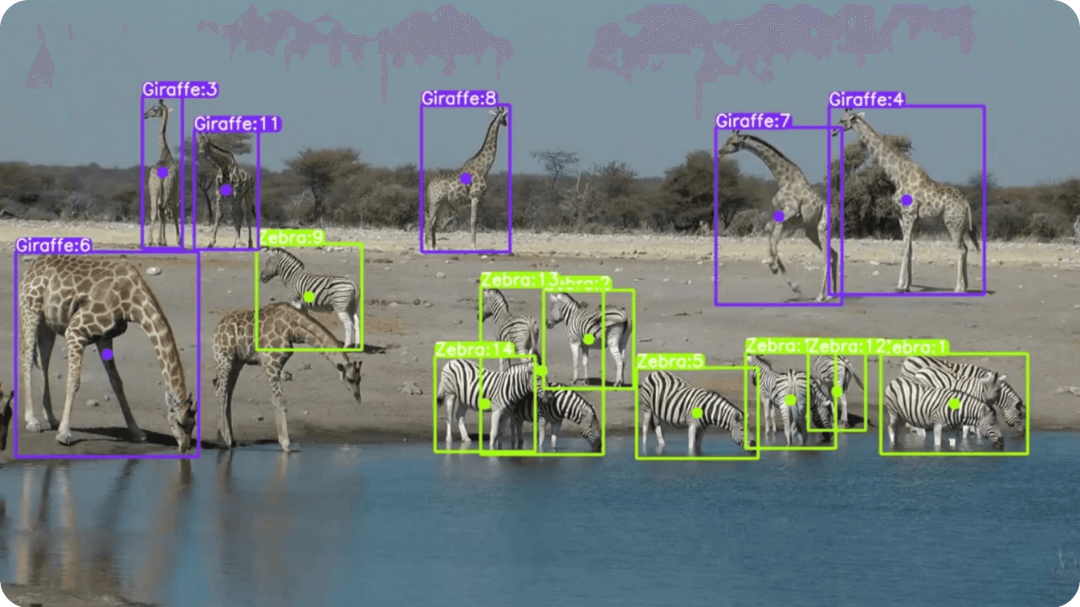
One year ago SpeciesNet, a tool that uses AI to automatically identify species in camera trap images, went open-source. Now more people than ever are using the Google-developed tool to further research and conservation efforts.
Motion-triggered cameras, or “camera traps”, are giving everyone from homeowners to parks managers an unprecedented view of their local wildlife. While a curious backyard user might be able to identify a critter by eye, larger projects are now collecting thousands or even millions of wildlife images that could take decades to identify manually.
Today, more people than ever are using AI to identify the animals in their images with SpeciesNet. This Google-developed AI model can classify nearly 2,500 animal categories in camera trap images, thanks to conservation partners who have provided 65 million labelled images to train the model.
Originally part of the online platform Wildlife Insights, a year ago SpeciesNet was released as an open-source tool for others to download, adapt and refine.
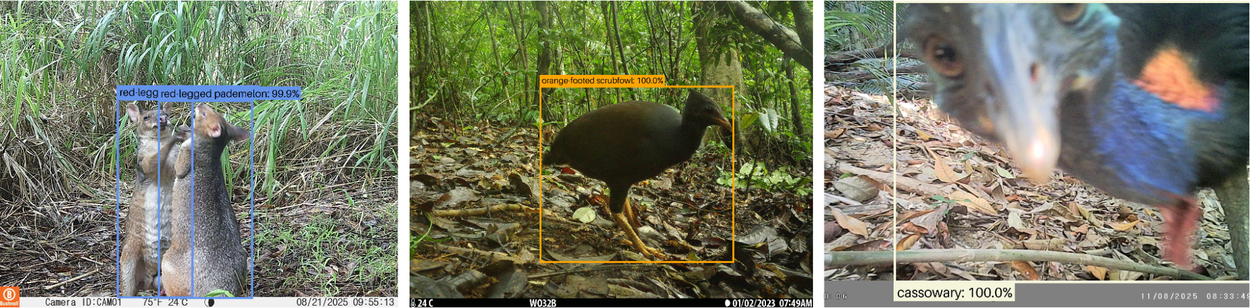
Over the past 12 months, research groups around the world have used the open-source SpeciesNet model to spot pumas and ocelots in Colombia, elk and black bears in Idaho, cassowaries and musky rat-kangaroos in Australia, and lions and elephants in Tanzania’s Serengeti National Park.
The AI model is allowing more people to ask broader questions about wildlife patterns and conservation.
SpeciesNet is part of Google Earth AI, a collection of geospatial tools, datasets and AI models for deep planetary intelligence. Earth AI empowers communities and nonprofits to address some of the planet’s most pressing needs.
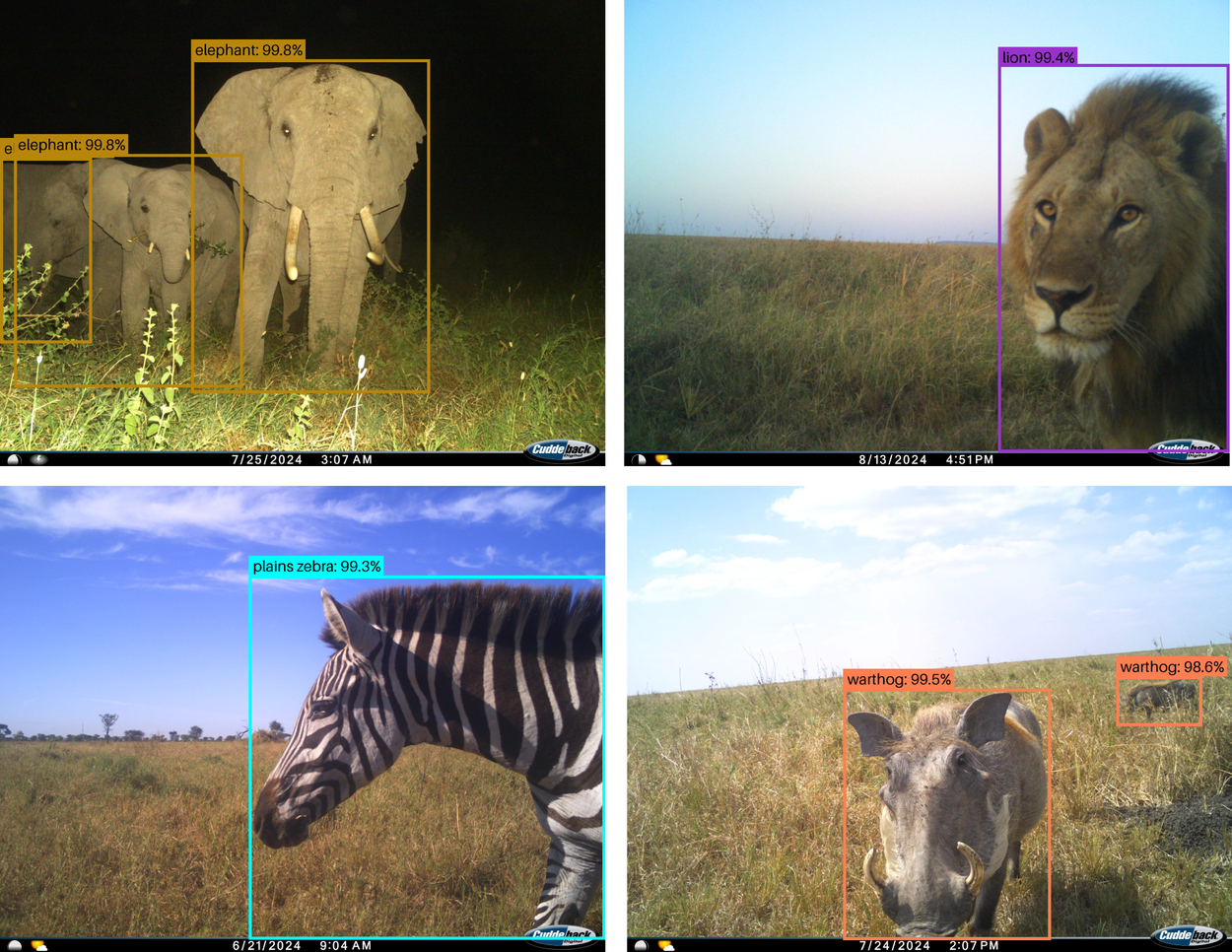
Today, almost all effective wildlife monitoring relies on motion-triggered wildlife camera traps.
Cameras are typically mounted on trees. In most cases, motion by heat-radiating bodies triggers a few-seconds burst of imagery. Increasingly affordable technology is letting projects deploy dozens or even hundreds of cameras, generating vast amounts of data.
SpeciesNet leverages deep learning to automatically identify animal species present in camera trap photos. This automation accelerates research, facilitates more efficient data analysis, and ultimately supports more informed management and conservation.
Identifying animals is important to:
- Gauge population health
- Detect early warnings of environmental changes
- Study animal migration patterns
- Monitor climate change effects
- Estimate population sizes
- Identify rare or endangered species
These insights help scientists better understand and protect threatened wildlife populations.
SpeciesNet is a global-scale AI model that classifies 2,498 categories, including mammals, birds, and reptiles.
SpeciesNet works alongside another open-source model called MegaDetector, which determines:
- Which images contain animals
- Which pixels in the image contain those animals
SpeciesNet then produces:
- The species name
- A confidence score
- Detection of multiple animals in a single image
Processing Speed§
- 30,000 images per day on a standard laptop
- 250,000+ images per day on a low-end gaming GPU
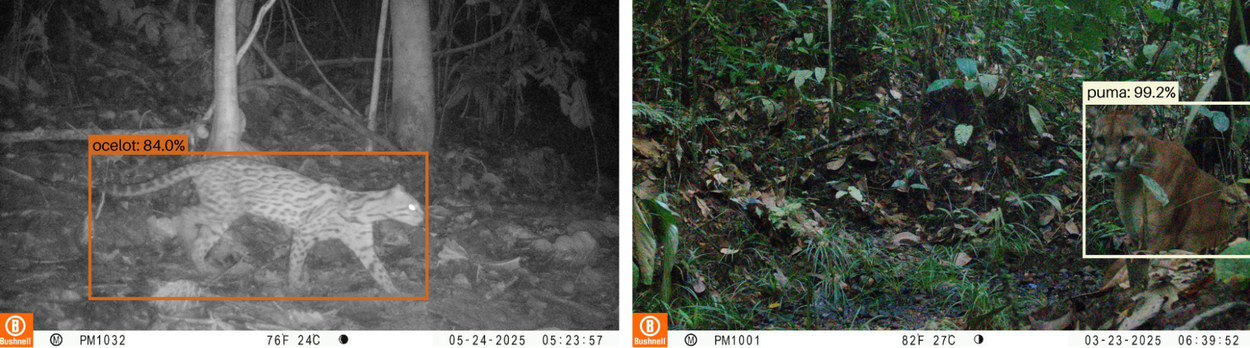
SpeciesNet has been operational within the Google Cloud-based Wildlife Insights platform since 2019.
Wildlife Insights is a community platform hosting approximately 200 million images with human-verified labels.
SpeciesNet helps users label images automatically. Any images verified by humans are then fed back into the system to improve training data.
Training Dataset§
SpeciesNet was trained on over 65 million images, including:
- Curated images from the Wildlife Insights community
- Labeled images from public repositories
The model uses a Convolutional Neural Network (CNN) to identify animals down to the species level under varying conditions such as:
- Lighting
- Camera angles
- Distance from subject
Accuracy Metrics§
- 99.4% detection rate for images containing animals
- 83% species-level classification
- 94.5% accuracy among those predictions
Further details about training and evaluation were published in a 2024 research paper.
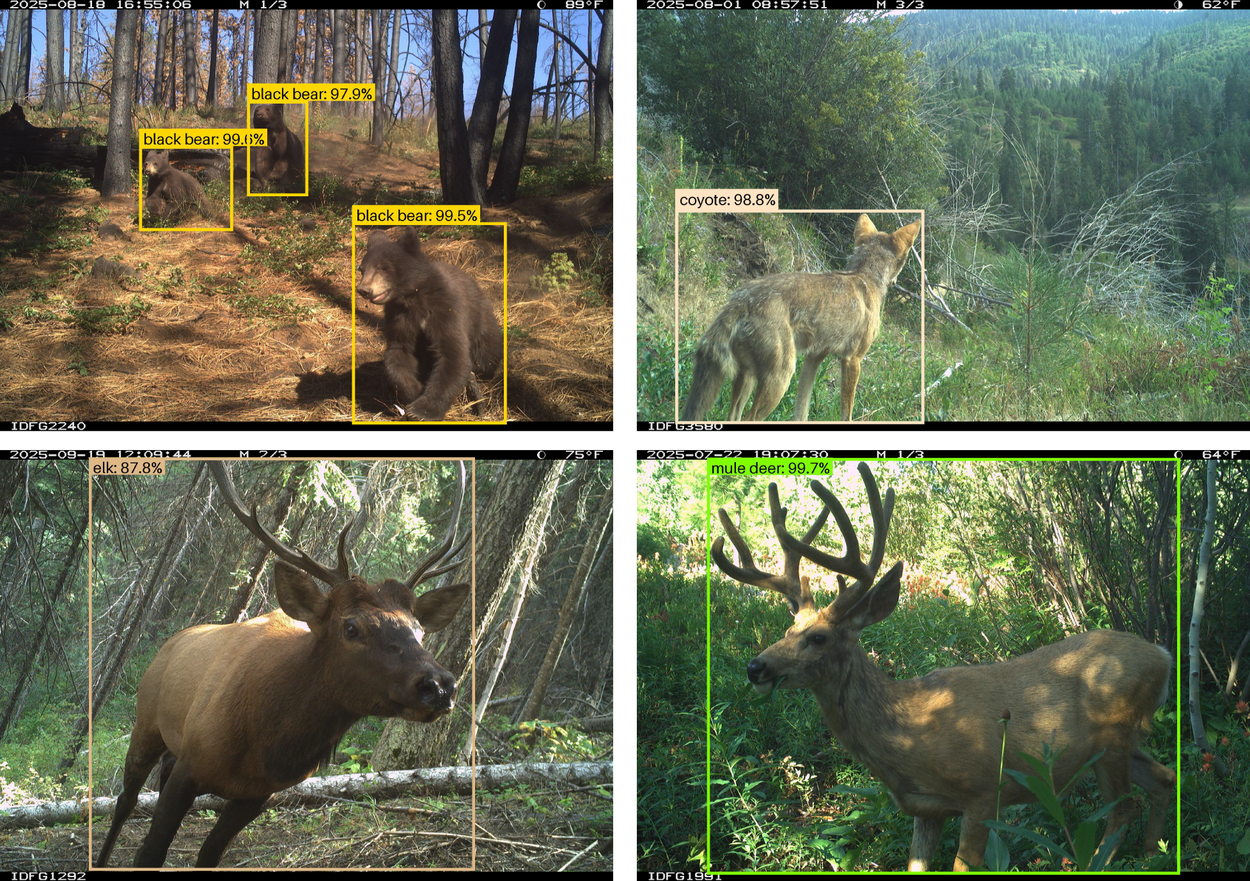
Over the past year, several research initiatives have adopted SpeciesNet.
Snapshot Serengeti – Africa§
Millions of wildlife images captured since 2010 through the Snapshot Serengeti camera trapping program are now being analyzed.
Earlier, these images were reviewed by citizen scientists, but the growing data volume eventually exceeded volunteer capacity.
Using SpeciesNet, Todd Michael Anderson from Wake Forest University analyzed 11 million images in just days.
With SpeciesNet running locally on his laptop, Anderson can:
- Process camera data directly in the field
- Analyze sightings in real time
- Redeploy cameras for targeted wildlife monitoring
Wildlife Observatory of Australia (WildObs)§
Some groups have adapted SpeciesNet to local wildlife species.
In Australia, WildObs trained a custom version of SpeciesNet to detect animals not originally included in the 2,498 categories, including:
- Musky rat-kangaroo
- Orange-footed scrubfowl
WildObs is also contributing its training data back to the Wildlife Insights community, strengthening the global dataset.
Idaho Department of Fish and Game§
Government agencies are also using SpeciesNet.
The Idaho Department of Fish and Game processes camera images from hundreds of monitoring stations tracking:
- Deer
- Elk
- Black bears
- Rare and endangered species
SpeciesNet acts as a first-pass detection tool, dramatically speeding up human verification workflows.
Conservation Platforms and Tools§
SpeciesNet is now integrated into multiple platforms including:
- Animl — a camera trap data platform by The Nature Conservancy
- AddaxAI — desktop AI tool for ecological image processing
Private companies are also adopting the model.
For example, Okala combines SpeciesNet with another AI audio monitoring system called Perch to monitor biodiversity across multiple African ecosystems.
Colombia’s Red Otus Wildlife Network§
The Humboldt Institute in Colombia expanded camera trapping efforts through a national monitoring network called Red Otus.
Since launching at COP16 in 2024, the network has grown to:
- 446 cameras
- 100,000+ images captured in 2025
Researchers are using these images to analyze behavioral shifts in wildlife.
Early findings suggest:
- Some mammals are becoming more nocturnal
- Birds appear later in the morning in developed areas
These changes may be responses to human activity or predators.
By releasing SpeciesNet as an open-source resource, the goal was to encourage collaboration and accelerate global progress in wildlife monitoring and conservation.
The GitHub repository includes:
- Model code
- Documentation
- Deployment resources
Researchers and developers are encouraged to:
- Contribute improvements
- Adapt the model for regional species
- Expand the model’s capabilities
For teams seeking a full platform experience, the Wildlife Insights platform provides tools for:
- Data management
- Collaboration
- Running SpeciesNet models efficiently
SpeciesNet represents a significant advancement in automating wildlife image analysis.
From baboons in Africa to wallabies in Australia, the system helps scientists process massive datasets and gain deeper insights into biodiversity.
By combining AI, community collaboration, and open-source development, SpeciesNet is helping researchers better understand and protect wildlife ecosystems worldwide.
Thank you to all scientists and contributors who supported the Wildlife Insights community, making SpeciesNet possible.
Special thanks to:
- Tomer Gadot
- Ștefan Istrate
for leading the training and development of the SpeciesNet model.
Projects interested in using SpeciesNet can reach out via:
FAQ
What is SpeciesNet?
SpeciesNet is an open-source AI model developed by Google that classifies roughly 2,498 animal categories in camera-trap images to support wildlife research and conservation.
How accurate is SpeciesNet for identifying animals?
SpeciesNet reports a 99.4% detection rate for images containing animals, an 83% species-level classification rate, and 94.5% accuracy among those predictions.
Can I run SpeciesNet locally or do I need cloud infrastructure?
You can run SpeciesNet locally (about 30,000 images/day on a laptop) or accelerate processing with a GPU (250,000+ images/day); it's also available via the Wildlife Insights cloud platform.
Can SpeciesNet be adapted for local or rare species?
Yes — teams can fine-tune or extend SpeciesNet with local labeled images; several projects have trained custom versions for regional species and contributed data back to the community.