Artificial intelligence (AI) has been a popular topic for the past decade, but more recently terms such as generative AI (gen AI) and agentic AI have emerged. While traditional AI offered users an exciting new way to recognize patterns and analyze data, gen AI can create new patterns and content like text, images, video, audio or software code.
Furthermore, agentic AI takes autonomous capabilities to the next level by using a digital ecosystem of large language models (LLMs), machine learning (ML), and natural language processing (NLP) to perform autonomous tasks on behalf of the user or another system. A gen AI model that has garnered much attention is ChatGPT. While this product offers similar creative abilities to agentic AI, it isn’t the same.
Agentic AI is focused on decisions as opposed to creating the actual new content, and doesn’t solely rely on human prompts nor require human oversight. Early-stage agentic AI examples include things like autonomous vehicles, virtual assistants, and copilots with task-oriented goals. Gen AI and agentic AI tools are offering enormous productivity benefits to individuals and organizations. It’s important to differentiate the two terms and how each works to drive innovation and decision-making.
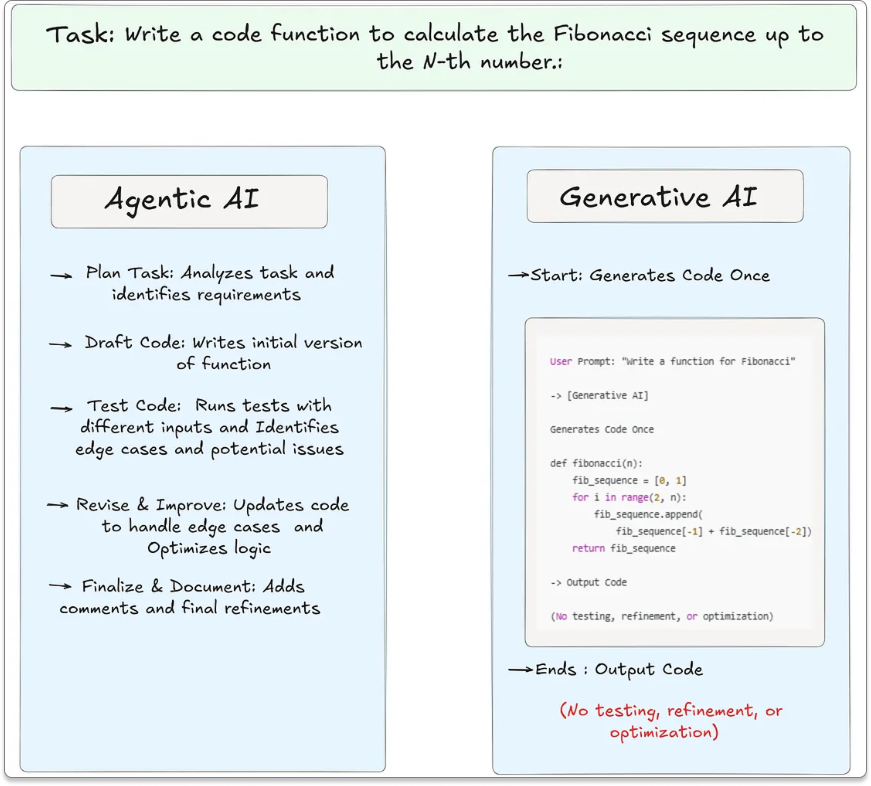
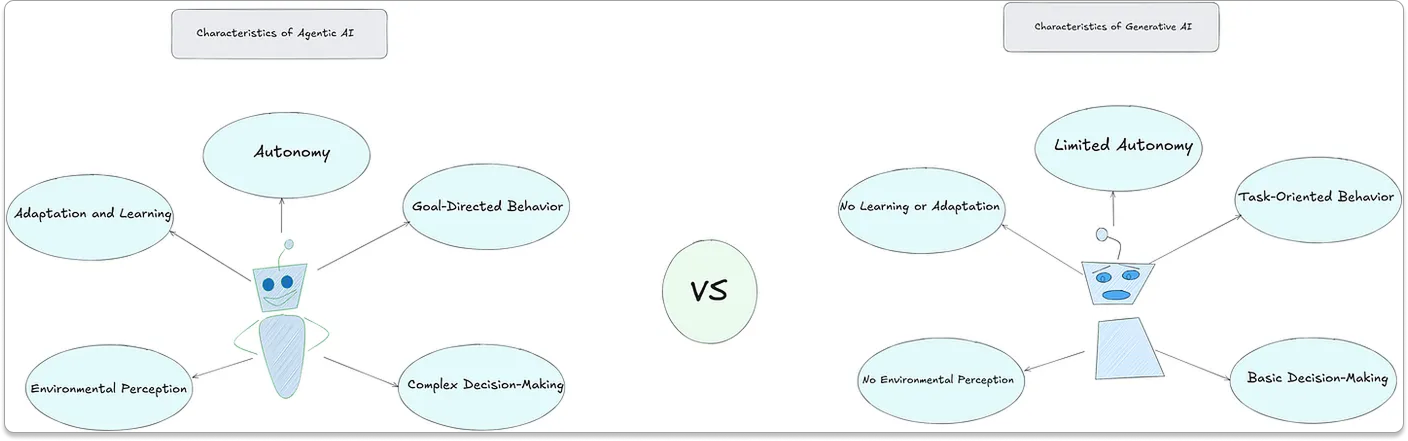
Agentic AI and generative AI have objectives and distinct attributes that make them unique from one another.
Key features of generative AI§
- Content creation: Where gen AI excels is in content generation. The AI models can create coherent context like essays and answers to complex problems. AI applications, like OpenAI’s ChatGPT can generate answers, write lists, and give advice when prompted by user input. Using gen AI solutions to produce code can streamline software development and make it easier for developers of varying skill levels to write code.
- Data analysis: Generative AI can analyze vast amounts of data and use that analysis to discover patterns and trends. The gen AI models can streamline complex workflows, especially when it comes to the supply chain and drive a better customer experience.
- Adaptability: Gen AI can adapt its outputs based on the input it receives from the user. If the user is providing specific feedback to the model the outcome shifts to align more to what the user is seeking and in turn refine the output.
- Personalization: Gen AI technology can make personalized recommendations and experiences based on the inputs from the user. The retail industry has, for example, taken to highly personalized experiences for their customers thanks to gen AI technology that is helping them understand every detail of their customer preferences.
Key features of agentic AI§
- Decision-making: Because of the pre-defined plans and objectives these AI systems can assess situations and determine the path forward without or with minimal human input.
- Problem-solving: Agentic AI uses a four-step approach for solving issues; perceive, reason, act, and learn. These four steps start by having AI agents gather and process data. The LLM then acts as an orchestrator that analyzes perceived data to understand the situation. And is then integrated with external tools that are continuously improving and learning through feedback.
- Autonomy: Autonomous behavior defines agentic AI. It’s unique ability to learn and operate on its own make it a promising technology for organizations seeking to streamline workflows and have machines perform complex tasks with minimal human intervention.
- Interactivity: Due to its proactive nature, agentic AI can interact with the outside environment and gather data to adjust in real-time. One example is self-driving vehicles, which must constantly analyze its surroundings and make safe, accurate driving decisions.
- Planning: Agentic AI models can handle complex scenarios and execute multi-step strategies to achieve specific goals.
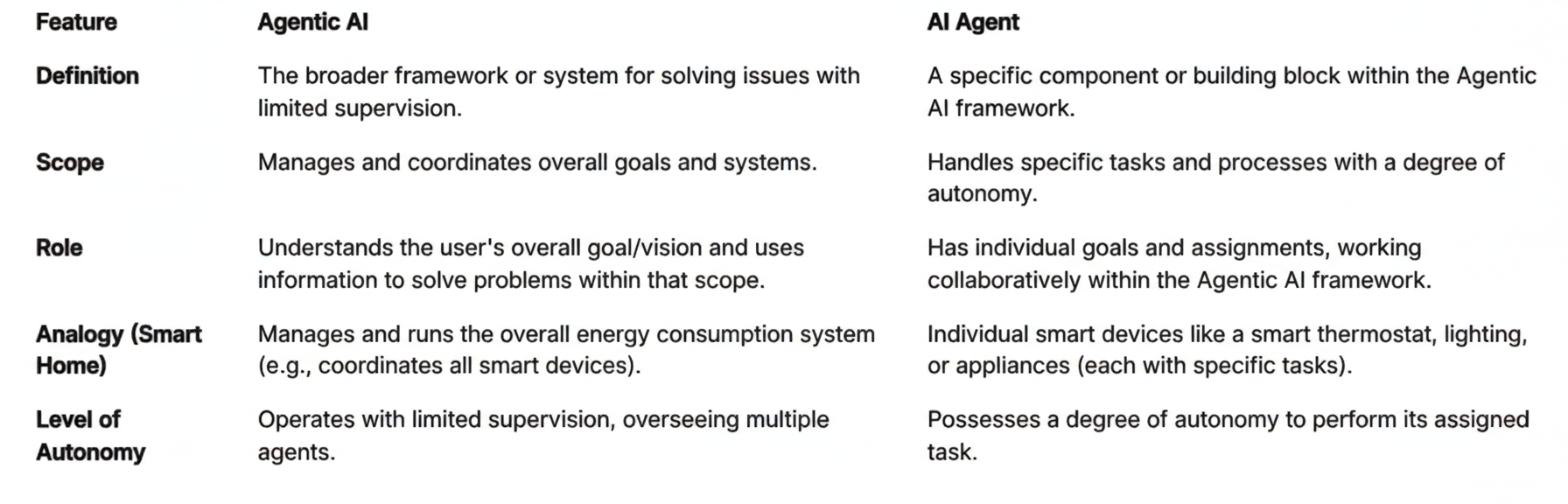
It’s important to differentiate between agentic AI and AI agents. Essentially, agentic AI is the framework; AI agents are the building blocks within the framework.
cases for agentic AI and generative AI
_There are many use cases for generative AI, however many applications of agentic AI are still in the experimental phase. Potential agentic AI uses cases are emerging in functions like customer service, healthcare security, workflow management and financial risk management._
Generative AI use cases§
#### Content creation for SEO
Businesses are using gen AI to produce large volumes of SEO-optimized content, such as blogs and landing pages that help drive organic traffic. For instance, a digital marketing agency might use gen AI tools to create high-quality, keyword-optimized blog posts or web pages for their clients to rank higher on search engines.
#### Marketing and sales
Human sales teams oftentimes are bogged down with administrative tasks when their main goal is to find and develop sales leads. Sales teams have been a generative AI use case for a while now through chatbots and virtual assistants. The AI technology can do specific tasks and drive optimization on a sales team, along with lead generation outreach.
#### Product design and development
The gen AI capabilities available can help organizations in creating new product concepts or designs based on market research, trends, and user preference. Which might in turn speed up the product development cycle. An example is a fashion company by using gen AI to design a new clothing line and generating designs based on consumer input and market data analysis.
#### Customer support automation
Gen AI can help companies automatically generate responses for customer service inquiries. The tools can craft answers for common questions and troubleshoot issues in real-time. Take an ecommerce business for instance. It can use gen AI in chatbots to handle many tasks, such as order status inquiries, refund requests, and shipping questions.
Agentic AI use cases§
#### Customer service
The traditional models for customer chatbots had limitations due to the pre-programmed nature of the technology and would require human intervention at times. Whereas with autonomous agents, the model can quickly understand what a customer's intent and emotion is and take steps to resolve the issue.
These autonomous systems can therefore predictively assess a situation and help ensure a smoother customer interaction with a business. The customer experience is exceedingly important in the world today as businesses seek out higher retention and enhanced loyalty. Specifically, agentic AI can automate tedious tasks by gathering, cleaning, and formatting an organization’s data. These systems can take the weight off of human employees and free them up to do more high-impact projects and tasks.
#### Healthcare
AI technology has been used in the healthcare field already, including in diagnostics, patient care, and streamlining administrative tasks. Cybersecurity is one of the most vital features of any AI tool that is used in the healthcare space due to patient data and privacy concerns. This concern carries over into emerging agentic AI tools as well.
A potential use case example comes from Propeller Health, which is integrating agentic AI into its smart inhaler technology. The smart device is collecting real-time data from the patient on medication usage and outside factors like air quality. The device alerts healthcare providers when necessary and tracks patient patterns.
#### Automated workflow management
Agentic AI can manage business processes autonomously and handle complex tasks like reordering supplies and optimizing supply chain operations. It can automate internal workflows to make it easier on human employees without the need for their physical intervention.
_For example, a logistics company might use an agentic AI system to automatically adjust delivery routes and schedules based on real-time traffic conditions and shipment priorities. The scalability and increased capacity of agentic AI also makes it a good use case for the logistics industry specifically._
#### Financial risk management
Agentic AI can help industries meet client goals and optimize the results in real-time by analyzing market trends and financial data to make autonomous decisions about investments and credit risks. Financial institutions are looking to protect their clients' investments while also making smart and strategic decisions that result in higher returns.
Agentic AI can improve those practices by acting autonomously and adjusting strategies based on real-time economic, social and political events. An example is a fintech firm that uses agentic AI to monitor market fluctuations and automatically adjust portfolio allocations.
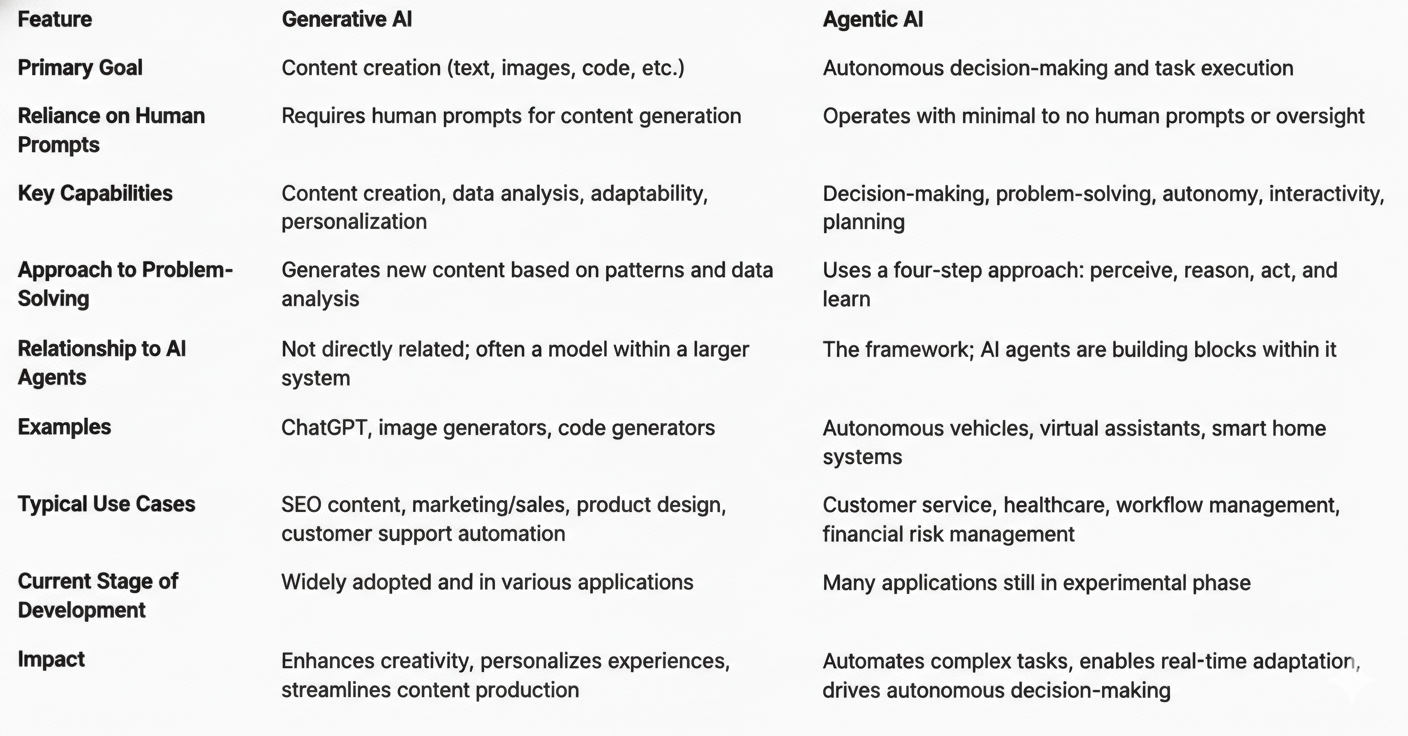
Key takeaways
- Generative AI excels at producing content, personalization, and data-driven insights based on user inputs.
- Agentic AI focuses on autonomous decision-making, planning, acting, and learning with minimal human intervention.
- Agentic systems combine LLMs, tooling, and feedback loops to execute multi-step tasks and adjust in real time.
- Use cases differ: choose generative AI for content and creative tasks, and agentic AI for automation, workflows, and autonomous operations.
FAQ
What is the main difference between agentic AI and generative AI?
Generative AI creates new content (text, images, code) based on prompts, while agentic AI autonomously makes decisions and executes multi-step tasks toward goals with minimal human oversight.
Can generative AI become agentic AI?
Generative models can be a component of agentic systems, but agentic AI requires orchestration, planning, tool integration, and autonomy beyond content generation to act on decisions.
What are common use cases for agentic AI?
Agentic AI is suited for autonomous workflow management, customer service automation, logistics optimization, and real-time financial or operational decision-making.
Is agentic AI safe to deploy in critical industries like healthcare?
Agentic AI can improve outcomes but raises safety, privacy, and governance concerns; careful validation, monitoring, and regulatory compliance are essential before deployment.